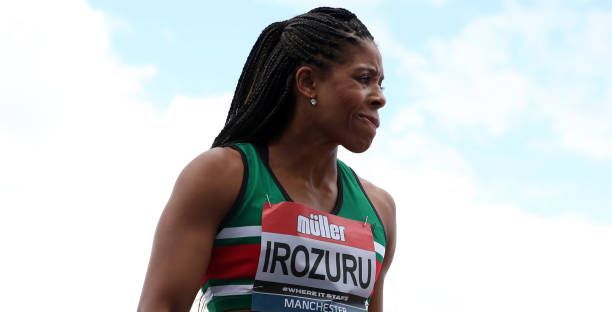
In 2016, after an achilles tendon rupture ruined my Olympic dreams for a second time, I retired from elite sport. But I came back and fulfilled my Olympic Dream in Tokyo! (Yay!) Eight years later, ahead of the Paris Olympic Games, I am waving goodbye to sport for a second and final time, twenty years from my first taste of true, competitive success in the sport. So, what can I share with professional athletes facing retirement, or with your friends, family and fans who will be supporting you through this transition into your new life after sport, where grief, loss of identity and a rediscovery of who you are away from the track, sandpit or pitch starts to happen?
[1] Keep Moving
Firstly, and rather obviously, let me start by saying – just because you transition out of elite or professional sport, this does not mean you transition out of sport completely. Please, for the sake of your health – mental, emotional and physical, of course – keep moving. Studies show that regular exercise can reduce the risk of depression by 30% (UK NHS report), dementia by about 28%, and for Alzheimer’s disease specifically, the risk was reduced by 45%! (www.alzheimers.org.uk). So, find a new sport or practise your usual sport. But perhaps without the Olympic or World Cup visions of old!
[2] Learn from & Speak with others
Secondly, though there is no single, prescriptive ‘best way’ for professional athletes to transition out of sport, talking it out with others who have gone through the journey is helpful. But, recognising that not every athlete or sportsperson who has retired has the capacity to share their story because of ‘past traumas’, please reach out to your performance lifestyle advisor, a trained counsellor or even drop me a message if you ever need somebody to vent to or to support you.
You can’t really talk to normal people about that [retirement feelings]. So, you want to talk to your teammates or former teammates or friends in other sports, but they don’t really want to have those conversations with you because they themselves have different injury traumas that it could bring up. So it was hard. A lot of the time I did feel alone. – Judah Simpson (Retired sprinter, rugby 7s player & bobsled athlete) on Define Your Success Podcast Ep3
So, with the wisdom that comes through the experience of two retirements before the age of 35, I can give you my two-pence on what has helped and what has hindered a healthy, happy transition out of sport.
My 2016 retirement from sport experience was abrupt and unexpected which led to a decisive and clear decision to transition out of sport. The hurt was heavy and my emotions were intense; my tears felt like a tap without an off-switch for about three tough months. And then… I felt better.
A key lesson I learned from this 2016 experience – ripping the band-aid off is super painful, but the pain is fleeting in the grand scheme of things.
In contrast, my 2024 retirement from sport has been a long, protracted one (pretty much over the last two years, LOL). The one positive in all of this is that I’ve been able to retire within a familiar, safe community and explore other aspects of professional life whilst keeping some form of familiar routine and people around me. During this time, I’ve discovered I love sport more than I had realised, and would therefore love to continue working within the sports industry in some capacity beyond my competitive career.
A key lesson I learned from this 2024 experience – There are many roles within the sports industry beyond the traditional, visible roles of coaching, physiotherapy or athlete; and as pro athletes, our sports network is our superpower, so allow space and time to intentionally explore and shape the next season of life after [competitive] sport in an exciting way, expanding the boundaries of our sports community
[3] be decisive
I interviewed Team USA decathlete, Curtis Beach on my podcast, Define Your Success Ep 2 several years ago. He retired from pro sport in his late-twenties, a common retirement age for athletes. Here’s what he had to say about clean and clear transitions out of sport, making exemplars of Ashton Eaton and Brianne Thieson-Eaton –
“What I found interesting and inspiring was how decisive they were; it was a done deal. And I think that’s how it should be. When you make a decision, you just want to stick to it.
CURTIS BEACH
But it’s not always that easy to come to an abrupt, clear-cut decision to retire on your own.
That’s why my 2016 heartbreak (an achilles tendon rupture) was so key for my successful, first transition out of sport.
That’s why the 2020 pandemic became the same thing for Curtis, clearing a pathway to the other side – life beyond sport.
The pandemic was a positive because it forced the end of a season that I don’t think I could have made myself and allowed me a whole bunch of time and space to just explore different things without trying to qualify for a certain meet.
But if there’s not a career-ending injury or a global pandemic in your way, what other factors could contribute to a healthier, happier transition out of sport?
Well, I can tell you some factors that hinder it…
Transition traps to avoid for a healthy athlete retirement
[1] Dipping in and out or half-heartedly committing to a sport that you have fallen out of love or passion for.
‘After the 2016 Olympic trials, I was really feeling burnt out. In 2018, I came back to the decathlon, but I was still really feeling like it was more of a burden instead of something I was excited about. – Curtis Beach
[2] Fear of what’s next…. Being unprepared or without a plan for life beyond sport.
Upon graduation, I was a ‘relief’ pharmacist. So the company that I worked for, I was able to work once every three months in order to remain active and I obviously continued to do my continuing education classes and staying abreast with my license. I did that for years. Now in retirement, I have more time to dedicate to pharmacy. And I love being a pharmacist. – Tiffany Ofili Porter (Ex-Athlete, Team GB Olympic Sprint Hurdler, Content Creator & Pharmacist) on DYS Episode 16
[3] A poor support network or an unempathetic team
It [retirement] was hard. A lot of the time I did feel alone. – Judah Simpson (Ex-sprinter, rugby 7s player & bobsled athlete) on Define Your Success Podcast Ep3
Conversely, to feel like you can let go without fear of judgment, but with the greatest level of personal love and acceptance and celebration of all you’ve accomplished up until that point is an incredibly freeing feeling.
“I didn’t feel like I was disappointing anybody when I made that decision [to retire] and that was really important; I didn’t have pressure to live up to what anybody else wanted of my life.”
Curtis Beach
[4] anticipate the loss of identity; be ‘more than an athlete’
Have you heard of the retirement identity crisis? It basically refers to the loss of identity athletes often suffer as they journey through retirement from sport, figuring out what’s next and who they are beyond being an ‘athlete’. This is particularly poignant for athletes, perhaps more intensely than other retirees, because of the young age in which they have to retire and the all-consuming nature of an athlete’s lifestyle. Elite sport isn’t a 9-5 that you can leave at the track or on the pitch. It’s how you eat, sleep and move through the world. What happens when every hour of your life changes? Recreating your 24 hour rhythm may be exciting for some, but daunting for the majority, which is part of the reason many athletes struggle with retirement.
‘You are that person that you wanted to be when you were younger and then you’ve completed that and then having that all ripped away from you, it kind of made me think, who am I?’
Judah Simpson
Starting again in a new career is also essential for the vast majority – (I’m making up this statistic, but I’d imagine about ‘vast majority’ equates to 97%) – of the sporting population when they retire. Questions like – if I’m not an athlete, then who am I? or simply, what’s next? – become very real, present and heavy questions to answer. These questions become increasingly oppressive if an athlete has been all-in with their sport, without side hustles, hobbies or other interests. This is why I am such a proponent of the ‘more than an athlete’ philosophy and share stories of athletes who do more than their sport. Naomi Metzger is a prime example and you can read more of her story here or listen to our conversation about NFTs, Afrochicks and triple jump on Define Your Success Ep7.
[5] Let Go through Acceptance
Ultimately, letting go of a sport that you have been doing for probably the majority of your life – that you’ve put your heart and soul into; that you’ve literally bled, sweat and cried for – will be one of the hardest things you’ll have to do. You’ll grieve. But that’s healthy. To not grieve is the worst thing. To hide your feelings or to pretend you’re okay – that’s not okay. So, let all the sadness and sorrow out. Even if it’s just for a moment or a day. Whatever your timeline, make sure you don’t do it alone. Talk it out. Cry it out. ‘It’ being your feelings. And then, with this new, real level of acceptance (acknowledging where you are without bitterness), move forward.
[6] Reconsider Grit & Perseverance
Final words on this subject are from the star of today’s show – Curtis Beach. I hope this resonates.
Athletes have a huge desire to persevere. And retirement, in a sense, is saying, ‘I’m going to give up.’
There’s very few people who accomplish what they set out to, so to do that, you have to give up on your dreams. Coming to terms with making that choice and saying, ‘I’m not going to persevere’ is incredibly challenging and I went back and forth for a long time until I came to the conclusion that I could.
Persistence is so ingrained and it’s a very key trait to have if you’re gonna be successful at all. So in a sense you’re almost overriding years of habit, of pushing through, of believing it’s possible.
Making a decision to retire is against all of those thought patterns and habits that led to success in a way.
And yet, I’ve personally found letting go, giving up, setting a clear end-date to say ‘no’ to jumping into a sand pit has been true success in this next season of my life.
So, you’re not weird for struggling with the decision, if that’s you. You’re not weird for grieving when you make that decision. You’re not weird if you feel relief and wonder, like Tiffany Porter, why didn’t I do this sooner?! And, more importantly, you’re not alone.
Big love & blessings,
Abs xx
Get In Touch
Drop me a message, email, whatever if you want to talk. I would be honoured to have that conversation. Or speak openly with other athletes / sportspeople you trust, your performance lifestyle advisor, sports psychologist, therapist or counsellor. But whatever you do, don’t navigate your transition out of sport alone.
And if you’ve read this as a member of an athlete’s support team – coach, physio, family, friends, fans – I hope you’ve found this useful to better support your athlete or player as they transition out of sport. If you have any questions, please get in touch.
Stay Connected
…
Ask Abs
I was asked this question a few weeks ago, following a talk I’d delivered on ‘Breaking Barriers’ for the Cheshire Fire Service. If you’d like to submit a question for me to answer on here, YouTube or an Insta post, you can submit your question here.

 abigailirozuru