
Discipline is a form of consistency—but not just any kind of consistency. It’s not about consistently showing up late to lectures or consistently failing to meet deadlines. Nor is it about regularly neglecting your obligations, like skipping gym class or indulging in too many “treat” meals.
True discipline is about maintaining a consistent level of focus and application in the positive aspects of life. It means showing up early, setting deadlines and meeting them, and honouring your commitments—whether it’s attending gym sessions after a long day or managing your meals thoughtfully. You recognise that movement benefits your mental and physical health, and that shared movement fosters emotional well-being. Even treats are part of a coordinated plan because that’s what discipline looks like.
But let’s be honest: discipline isn’t easy.
Then again, neither are the consequences of a lack of discipline.
As the saying goes, “Choose your hard.”
Why Discipline Matters
Discipline provides freedom. It might sound paradoxical, but when you impose structure on your life, you gain control and clarity. Without discipline, external forces (deadlines, other people’s expectations, and even our own procrastination) dictate our actions.
Without discipline, external forces dictate our actions.
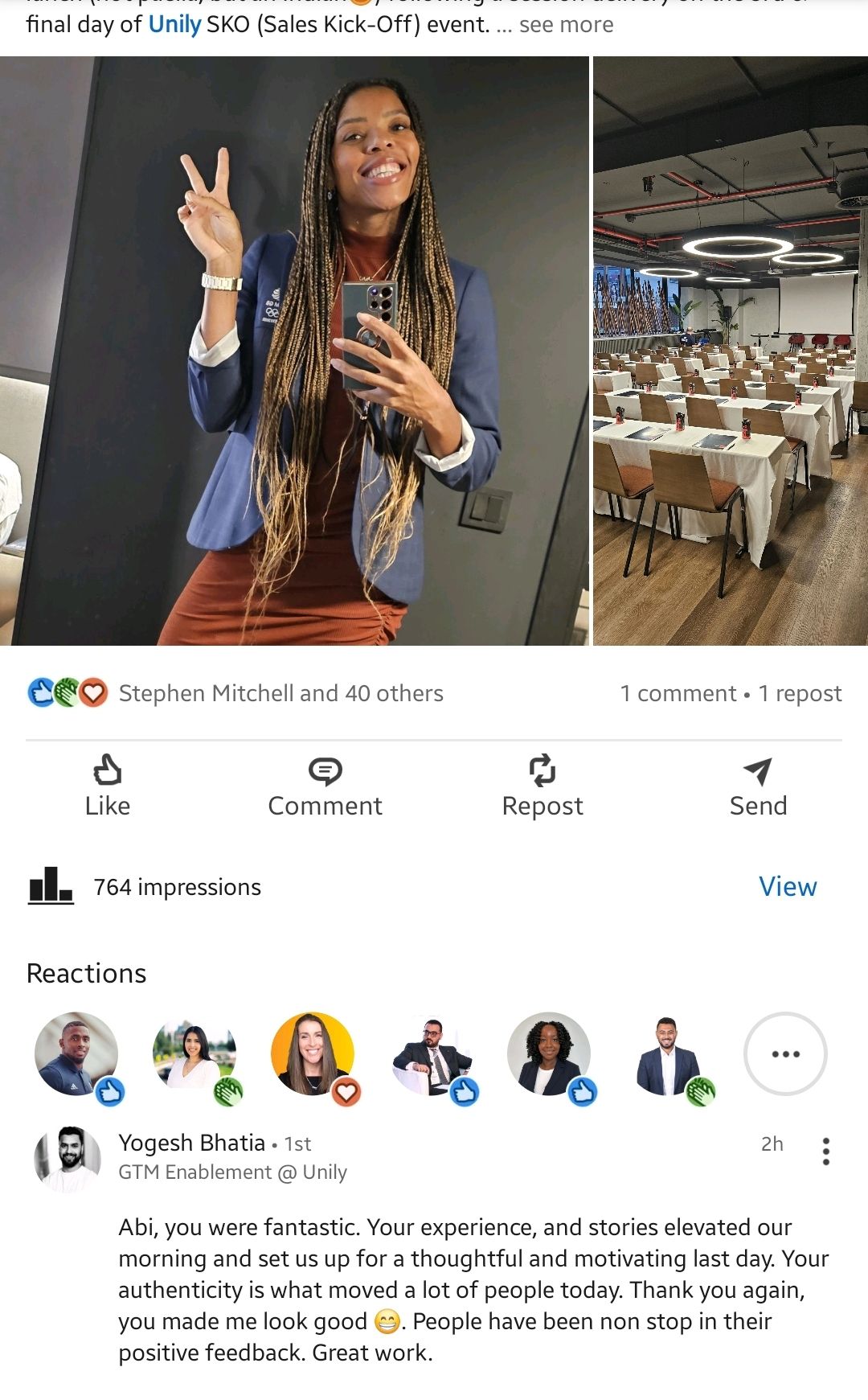
In my first talk of the year (January 2025) for Unily’s global Sales team, I explored the ABCs of High-Performance Resilience. This time, I added a “D” for Discipline. The ABCDs might not have the same ring as the ABCs, but it made the message complete.
One story I shared was about shovelling snow off the track to ensure we could get a winter practice in as my training squad and I prepared to fly in the 2012 Olympic season. We had to both clear the snow, which felt like a workout in itself, and then do the proper workout afterwards. What a stark contrast to an Instagram video I recently watched of a coach effortlessly clearing the snow with blowers. Despite the ease and the fact the athletes didn’t need to lift a hand, these frustrated young athletes were still annoyed that practice had not been cancelled; they still had to do their workout. It made me reflect on how much easier we have things today. Is that a good or bad thing? I’m not here to be the grumpy older person lamenting “back in my day,” but I do wonder: Are we losing essential elements of the human experience that build healthy, high-performing individuals?
The Opposite of Discipline
In my view, the opposite of discipline is endless doom-scrolling, a lack of boundaries, and a free-for-all approach to life. Instead of a “one more rep” mentality, it becomes a “one more episode” mindset.
This isn’t a critique of younger generations—it’s a reflection on myself, too. I’m genuinely writing this from a place of ill-discipline and bad habits I’ve let infiltrate my life recently, too. If this resonates with you, perhaps it’s something worth addressing in your life as well.
How to Cultivate Discipline
So how do we turn off the TV, get off the sofa, and head to the gym regularly? How do we create routines that bring out the best in us emotionally, physically, mentally, and spiritually?
Here are a few disciplined habits I’m re-implementing and continuing over the next month and beyond:
Habit 1: Early Is Better Than On-Time, Late, or Never
Getting things done early reduces unnecessary stress. For example, completing my taxes early means avoiding last-minute panic. (Thank God for my amazing accountants helping me to avoid a fine!) Similarly, getting my workouts done first thing in the morning helps me respect my body from the start of the day. By evening, it’s not my body that’s tired—it’s usually my mind. Decision fatigue sets in, and the couch starts calling. So my 6am workouts have been a blessing, despite always thinking I could never be that girl!
Habit 2: A Budget Is Freedom, Not Restriction
Having a budget provides clarity and control. Whether it’s a grocery list or a financial spreadsheet, knowing what amount is allocated to what category brings peace of mind. I use an Excel spreadsheet to track my finances weekly. But when I let this slide, it creates chaos—unplanned expenses pile up, and I lose sight of my financial goals. One foundational principle I’ve followed since childhood is the biblical practice of tithing, rooted in my Christian faith. This 10% giving is automated in my life, ensuring that generosity is a consistent part of my financial discipline. What can you automate in your finances? How can you track your income and expenses so that discipline becomes freedom for you, too?
Habit 3: Eat That Frog
Brian Tracy’s concept from his book “Eat That Frog” is about tackling your most challenging task first. By getting the difficult task out of the way early, you set the tone for a productive day. As the saying goes, “A journey of a thousand miles begins with a single step.” Starting my day with a workout means I’ve already conquered something significant. How can you apply this in your own life?
Examples of Discipline as an Athlete
As an athlete, discipline was non-negotiable. Training sessions, nutrition, recovery—each element required consistent focus. This level of discipline taught me that success doesn’t come from occasional bursts of effort but from sustained commitment. This meant every single repetition within a training session was run with intentionality and consistency; if the coach asked for eight reps of 150 metres, with a certain amount of recovery and at a certain pace, I kept to that pace with as much focus as I could. The accumulation of these intentional, disciplined actions led to British titles and an Olympic dream fulfilled. What action(s) can you start to be more intentional about in your career?
Final Thoughts
As Jim Rohn states: “If you don’t discipline yourself, the world will do it for you.”
Discipline isn’t about perfection—it’s about intention and consistency. By adopting disciplined habits, we create space for growth and success in all areas of life. So, what’s one disciplined habit you can commit to today?
P.S. For more on discipline, sign up to the Altis newsletter. I knew I needed to finish writing this post, sat in drafts from earlier last month, when Stu shared his discipline post last week. Their newsletter and consistency on social media is also a great example of discipline and good habits producing excellent results!
Love and blessings,
Abs xx

 abigailirozuru
Hi Abs. Loved this, a perfect examp
LikeLiked by 1 person
Thank you, Ian!
LikeLike