
Last week, I did something I’ve never done before: I ran 5 kilometers.
That might sound small compared to my past life as a professional athlete or for those who a regular Parkrun-goers and marathoners, but for me, it was a milestone. I spent most of my career as a long jumper—an Olympian, ranked among the top ten in the world. My training was built around explosive bursts, short sprints, and living in heart rate zones 4–5. Endurance running? Not part of the plan.
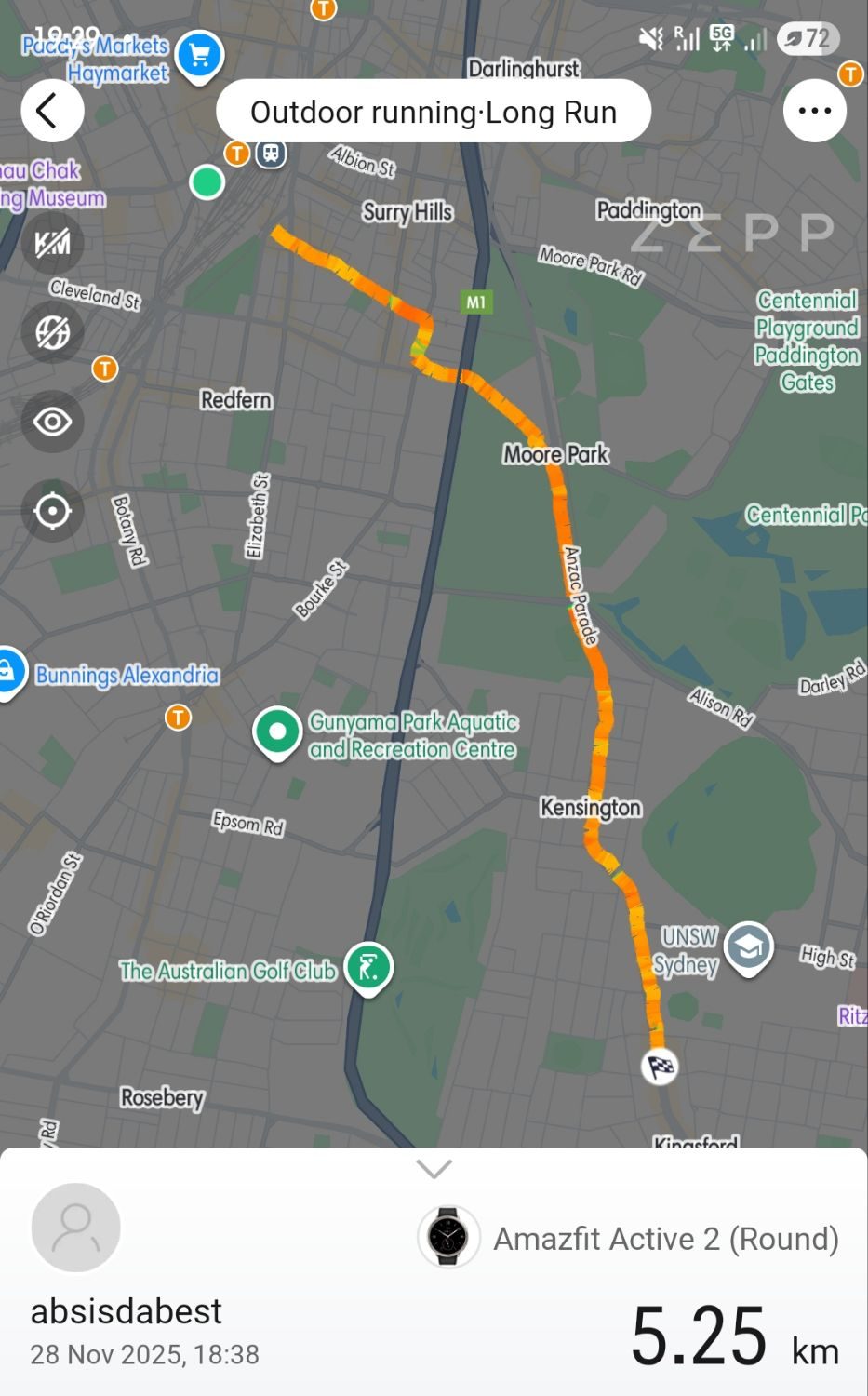
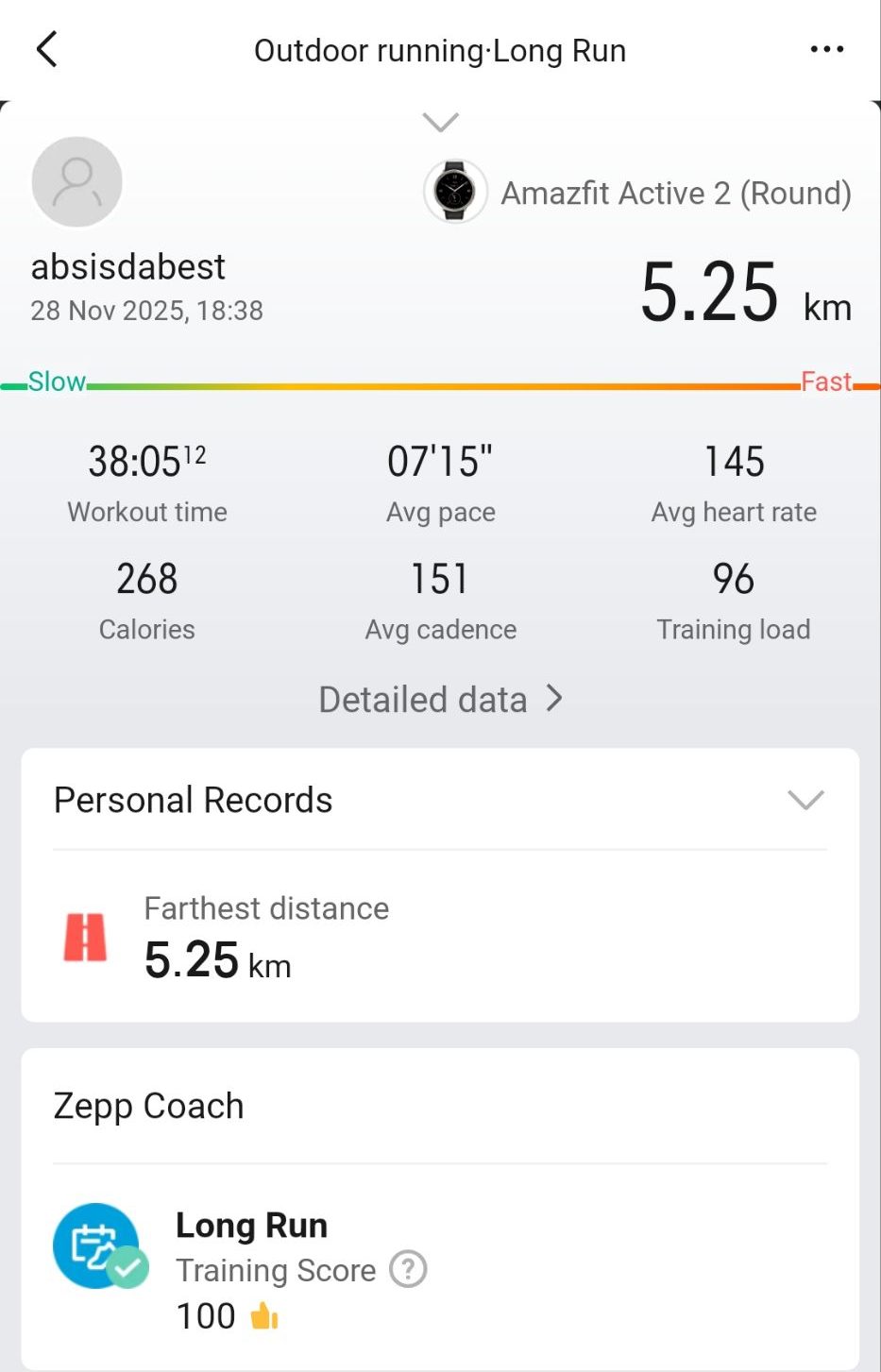
But now, five weeks into a new training program designed with AmazFit Active 2, I’m learning to slow down, to build aerobic endurance, and to embrace Zone 2 running. And last Thursday, during a 38-minute “long run” session on the AmazFit Zepp Coach app, I managed to cover over 5 km while keeping my heart rate between 122–155 bpm (Zone 2).
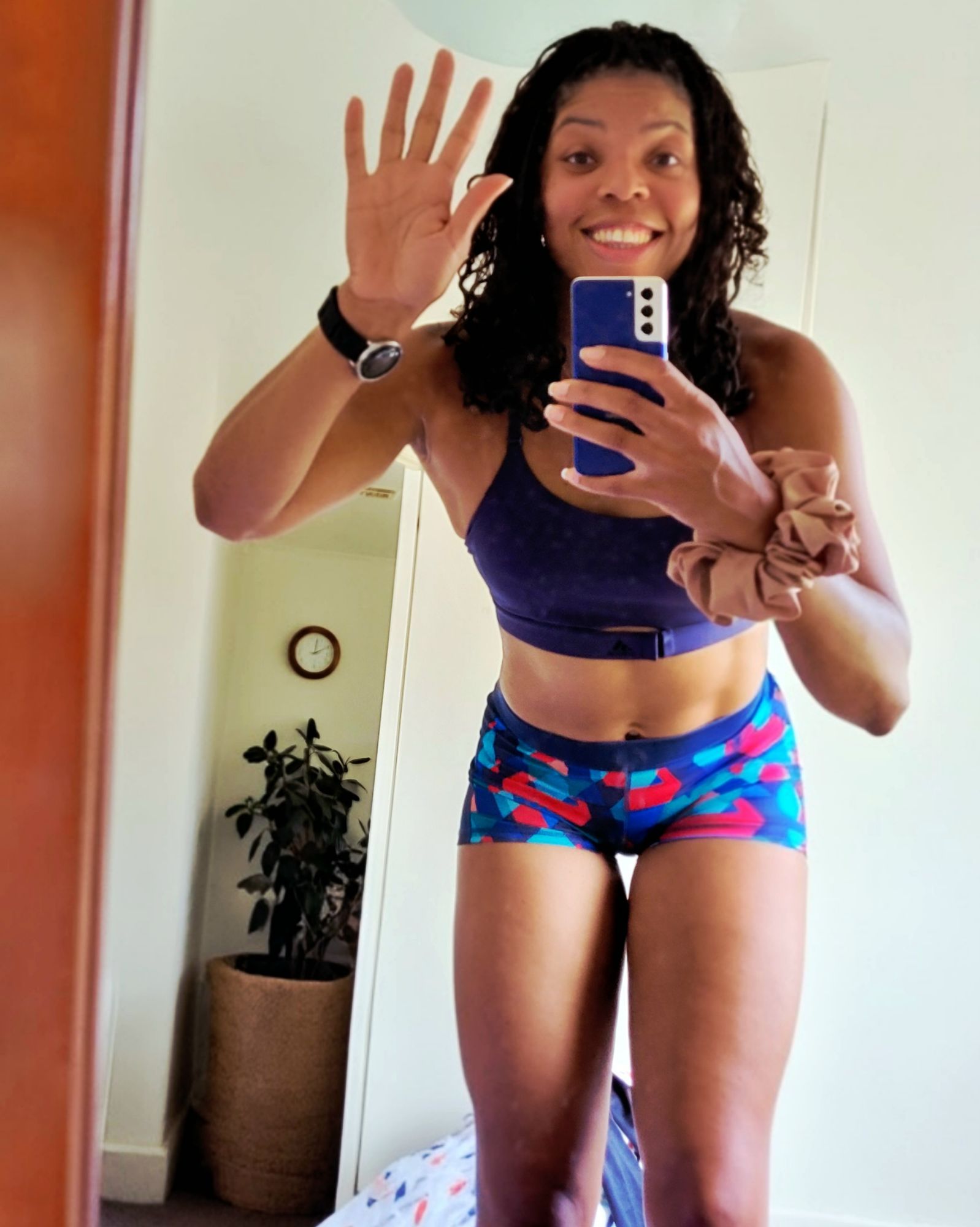
Discover the watch that coaches you with a personalised running plan (buy on Amazon)!
The following week, I repeated the same session and shaved nearly 30 seconds off my time—running 5 km in 36:10.77 compared to 36:37.05 the week before (and my third ever 5km time yesterday was run in 35:28.79). (Vulnerable moment here sharing these times because I know people assume I could run sub-30 or even 25-minute 5kms!!! MINDBLOWING!) My average pace improved to 7’15” per km, with a steady average heart rate of 145 bpm at (zone 2). Even better, it felt easier.
To put it in perspective: in a long jump competition, I might cover 500 meters total. That’s 10 times less than a single 5K run.
What I’m Learning
- Hills are brutal. I still have to slow down or even walk uphill to stay in Zone 2. Flat routes are my friend right now.
- Consistency matters. I’ve aimed for 4 runs per week, but realistically average 3. Some days Zone 3 feels too tough, and I bail out or step back.
- Physiology is real. Period impacts aren’t accounted for in training apps, but they affect performance. I’ve had to listen to my body and adjust.
- Progress is happening. My VO₂ max is likely improving—my pace is quicker at the same heart rate, and recovery feels smoother.
Why Zone 2?
Zone 2 training feels humbling. It’s slow, often boring, and frequently means walking hills. But it’s the foundation of endurance. Zone 2 builds the aerobic system—oxygen efficiency, fat metabolism, and stamina. Without it, you can’t sustain longer distances or repeated intervals.
Zone 3, by contrast, is tempo work: harder, more anaerobic, and closer to threshold. Sprinters like me have lived in Zone 3–5 for years, but endurance athletes spend most of their time in Zone 2.
Sprint vs Endurance: A Comparison
| Discipline | Typical Distance | Heart Rate Zone | Energy System | Style |
|---|---|---|---|---|
| Long Jump (competition) | 37.5m runway × 6 jumps (+ warm-ups, ~300–500m total) | Zone 4–5 | Anaerobic | Explosive, power-based |
| Sprint Training | 60–400m repeats | Zone 4–5 | Anaerobic | Dynamic, fast-twitch |
| 5K Run (training) | 5,000m continuous | Zone 2–3 | Aerobic | Steady, controlled |
| Endurance Training | 30–90 min runs | Zone 2 | Aerobic | Strength, fitness, patience |
To put it in perspective: in a long jump competition, I might cover 500 meters total. That’s 10 times less than a single 5K run. And every meter of those jumps is anaerobic, explosive, and short-lived. A 5K, by contrast, is aerobic, sustained, and slow compared to sprinting.
World-Class Endurance Runner Stats
Although, if you look at the world’s best endurance runners—Kenyan marathoners or Olympic 10K champions—their finishing kicks in the last 100–400 meters are essentially sprints. They blend both systems: aerobic endurance for the distance, anaerobic power for the finish.
For example, in the Paris 2024 Olympic Games women’s marathon, Sifan Hassan outsprinted Tigst Assefa in the final straight, described as “just a 100m sprint” to the line.
After 42 km, Hassan’s closing speed resembled a sub-15 second 100m effort, showing how elite endurance athletes can summon sprint mechanics even at the end of a marathon.
And check out these stats for the Olympic 10,000m Finishing Kick (Paris 2024)!
- Selemon Barega (ETH): 2:43.1 for the final 400m
- Yomif Kejelcha (ETH): 2:43.7 for the final 400m
- Jacob Kiplimo (UGA): 2:44.6 for the final 400m
- Grant Fisher (USA): 2:44.0 for the final 400m
That means these athletes were closing at ~65–66 seconds per lap pace—after already running 9,600m at ~2:40/km. Mind. Blown!
The Bigger Message
The real takeaway isn’t the numbers; it’s the feeling.
When was the last time you did something for the first time?

For me, running 5K was that first. It was tough, it was humbling, but it was euphoric. There’s something powerful about challenging yourself to stretch beyond your comfort zone, even if the achievement feels small compared to past glories.
I’m halfway through this Zepp Coach 10-week plan, with 5 weeks to go. My goal isn’t just the 5K—it’s preparing for Hyrox, where I’ll need to run 8 × 1km intervals alongside strength challenges. (Still freaking out about the prospect). But for now, I’m celebrating this milestone: my first 5K.
Because sometimes, slowing down is the only way to go further.
Love and hugs.
Abs xx
This is the start of a short series where I’ll share the lessons I’m learning as I move from sprint and power training into strength and fitness (endurance) for a Hyrox competition. If you’re a sprinter curious about longer runs, or simply someone looking to stretch into new forms of fitness, I’ll break down sessions, strategies, and insights so we can grow together. Follow along as I build my aerobic engine from scratch.

 abigailirozuru